Material
Temperature Range
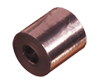
(to +1,600°F in a
reducing atmosphere)
Resistant to most media, not 'wetted' by molten metals or salts. Asbestos-free.
No ageing or embrittlement. Good resistance to thermal shock. Not re-usable.
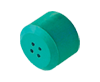
The elastic properties of the polymer are enhanced by vulcanization.
It is much more resistant to heat, light, oxidation, and petroleum than
ordinary rubber. Re-usable.
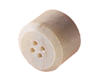
Crushes to a powder when compressed.
Porous to light gases and moisture. Hygroscopic.
Not suitable for most vacuum applications. Not re-usable.
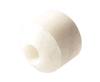
approved to US Pharmacopoeia Class VI . Has smooth, non-wetting, hydrophobic surfaces
that resist biofilm buildup and the lowest coefficient of friction of any solid material.
Low thermal transfer. Re-usable.

(intermittently to +545°F)
Solvent, acid and base resistant.
Low permeation rate. Mechanically robust at high temperatures. Re-usable.
particular applications. Please contact Spectite Inc. for assistance.
close window